SPF 30 vs SPF 50 – what does it actually mean?

Updated: Mar 9
In the previous posts I discussed the CHOICE sunscreen testing and how differences in testing and manufacturing may have contributed to the results.
The next practical question is what those numbers actually mean for everyday use.
Sunscreens that performed best in the testing
Sunscreen | Claimed SPF | Tested SPF | Type |
La Roche-Posay Anthelios Wet Skin | 50+ | ~72 | Chemical |
Neutrogena Ultra Sheer Body Lotion | 50 | ~56 | Chemical |
Cancer Council Kids Sunscreen | 50+ | ~52 | Chemical |
Mecca Cosmetica To Save Body | 50+ | ~51 | Chemical |
*Invisible Zinc Face + Body Mineral | 50 | ~38 | Mineral |
*best performing Zinc sunscreen
Most other products still provided useful protection but often tested closer to the SPF 20–40 range.
What SPF actually measures
SPF measures protection against UVB radiation, the part of sunlight that causes sunburn.
It compares how much UV exposure causes redness on protected skin compared with unprotected skin.
Another way to understand SPF is the percentage of UVB radiation blocked.
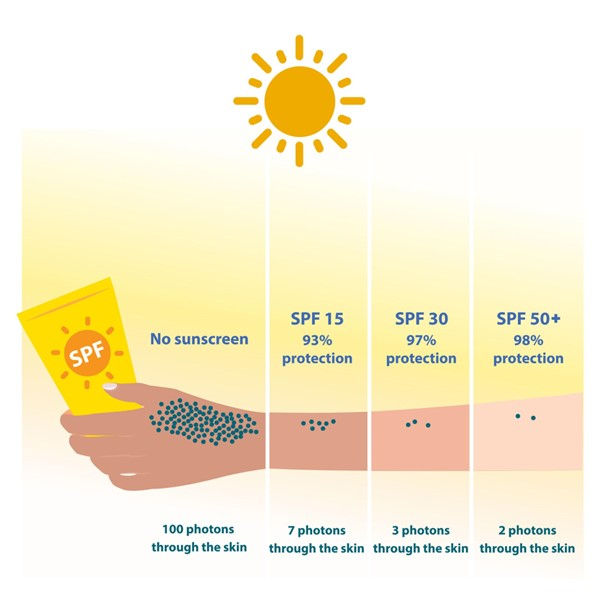
SPF | Approx UVB blocked |
|
SPF 15 | 93% |
|
SPF 30 | 97% |
|
SPF 50 | 98% |
|
Does SPF 50 mean you can stay in the sun longer?
In laboratory testing SPF is based on time to sunburn.
For example, if someone normally burns after 5 minutes without sunscreen:
SPF | Theoretical burn time |
SPF 30 | ~150 minutes |
SPF 50 | ~250 minutes |
However, this assumes sunscreen is applied very thickly (2 mg/cm²).
In everyday use people usually apply less than half this amount, and sweating, swimming and missed areas reduce protection.
For this reason, sunscreen should still be reapplied every two hours regardless of SPF rating.
The practical difference between SPF 30 and SPF 50 is therefore modest but helpful, providing a slightly larger margin if sunscreen is applied thinly or unevenly.
What if a sunscreen performs below SPF 30?
The sunscreen will still give protection however, the margin for error becomes smaller, especially in a high-UV environment like Australia.
For this reason, most guidelines recommend SPF 30+ or higher.
Simple takeaway
SPF 30+ would be the minimum I would use
SPF 50 gives an additional margin of safety
application thickness matters
one teaspoon per limb, front and back of the body
half a teaspoon for the face, neck and back of ears
reapplication matters
reapply every 2 hours unless stated otherwise
chemical sunscreens performed the best in the choice study
In the next post, I’ll look at the differences between mineral and chemical sunscreens, and also discuss how sunscreen ingredients are assessed for safety.


The article provides a nuanced understanding of sunscreen efficacy and application, emphasizing that SPF ratings can be misleading without proper usage. The reminder to reapply every two hours is crucial for effective protection. It's interesting to draw parallels between this caution and the concept of using Pay ID https://payid.pure-bred.com/ in financial transactions—both require diligence to ensure safety and effectiveness. Ultimately, knowledge and proper application significantly enhance protection in both contexts.